Antonito, Colorado
A historic railroad town with deep cultural roots and a gateway to one of Colorado’s great scenic train journeys.
Colorado Railroad History Lives Here
Antonito’s story is closely tied to the railroad, the San Luis Valley and generations of southern Colorado culture. Today it remains the Colorado gateway to the Cumbres & Toltec Scenic Railroad.
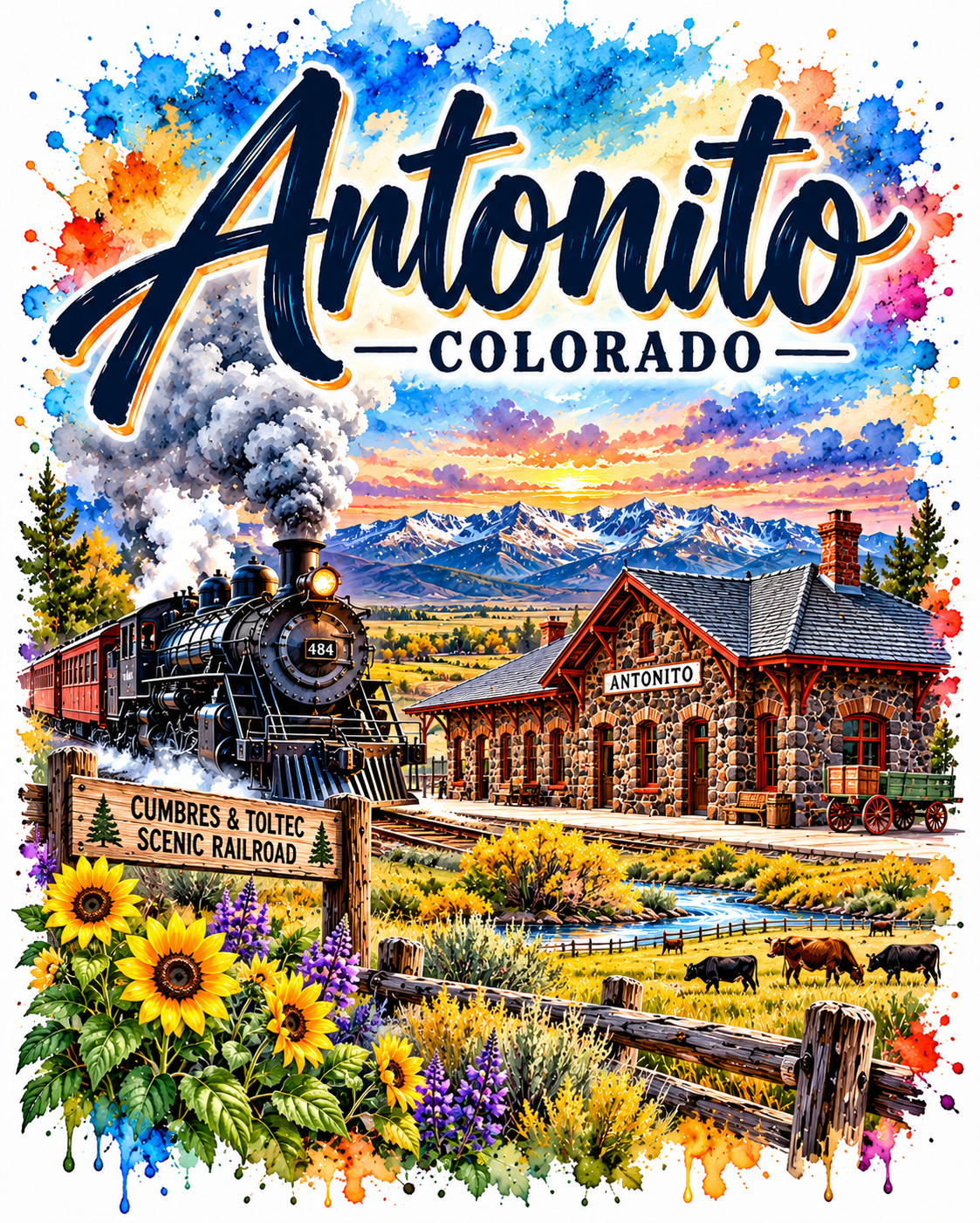
A Colorful Tribute to Antonito
This Antonito artwork brings together narrow-gauge steam railroading, the historic stone depot, ranch country, wildflowers and the mountain horizons of Colorado’s southern San Luis Valley.
Collect the places you’ve been. Discover the places you’ll go next.
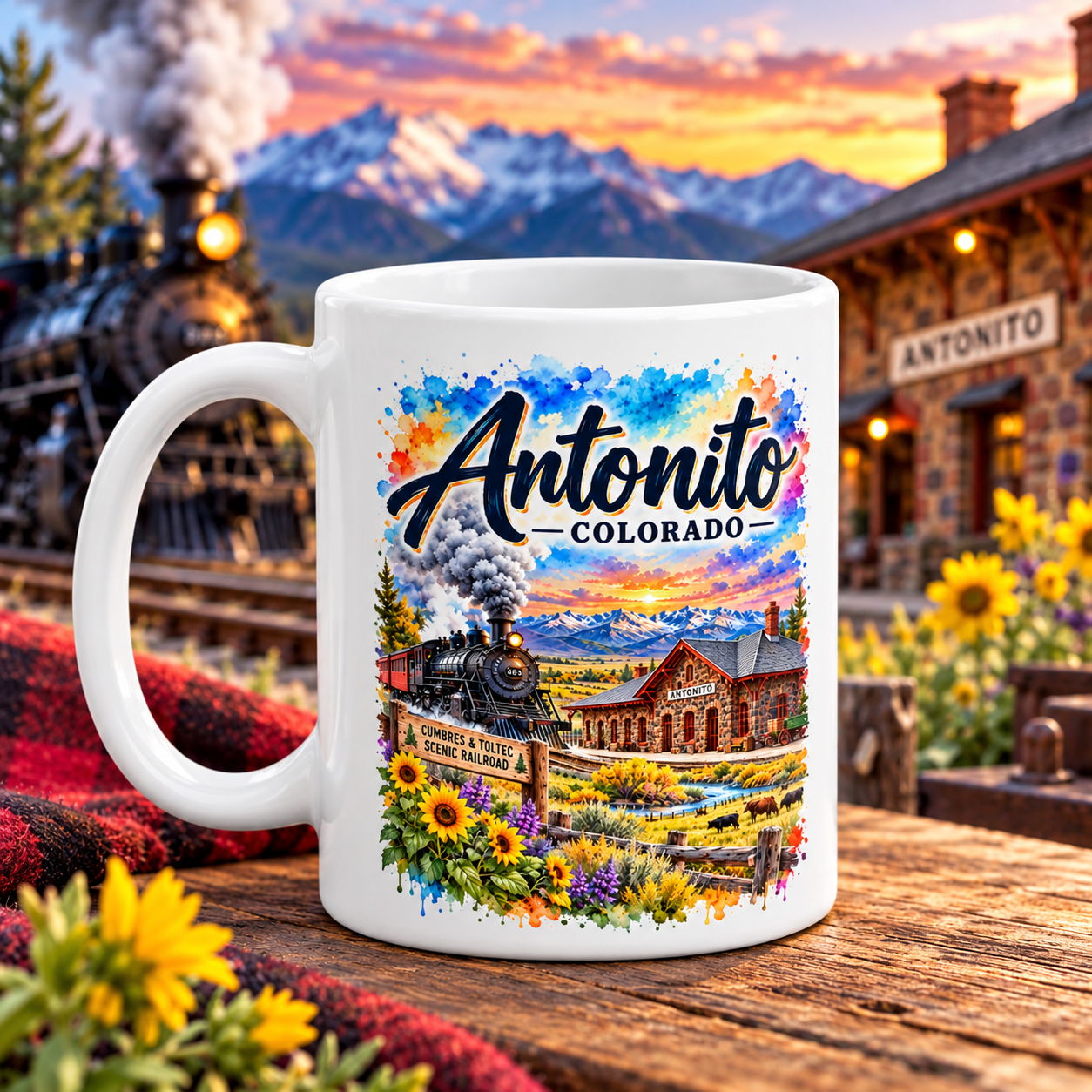
Antonito, Colorado Souvenir Mug
$13.99 + shipping
Bring home a colorful piece of Antonito, Colorado.
Shop the Antonito Mug →A Town Built by the Railroad
Antonito owes its existence to the Denver & Rio Grande Railroad. As the railroad pushed south from Alamosa in 1880, company officials established their own townsite near the older community of Conejos. The settlement was first associated with the name San Antonio Junction; within months the name became Antonito—Spanish for “little Anthony.”
The first train reached the new town on March 27, 1880. Antonito quickly developed around the tracks with a depot, railroad facilities, stores, churches, warehouses and homes. Its position made it a transportation and shipping center for the southern San Luis Valley and northern New Mexico.
Narrow Gauge, Ranching & a Crossroads of the Southwest
Antonito became a major railroad junction. One route headed west across Cumbres Pass toward Chama, Durango and the San Juan mining country, while another ran south toward Santa Fe. The Santa Fe branch—later remembered as the Chili Line—closed in 1941, but the mountain route survived.
The surviving 64-mile narrow-gauge line from Antonito to Chama was originally built in 1880 as part of the Rio Grande’s San Juan Extension to serve southwestern Colorado’s silver-mining district. After regular freight operations ended, Colorado and New Mexico jointly purchased the scenic section in 1970. The Cumbres & Toltec Scenic Railroad began carrying tourists the following year and remains one of Antonito’s defining attractions.
Antonito’s historic railroad landscape includes its distinctive 1880 Denver & Rio Grande depot, built of local volcanic stone. Farming, sheep ranching and regional trade also shaped the community, while generations of Hispanic families have given the southern San Luis Valley its enduring cultural character.
What Antonito Is Known For
Antonito is one of Colorado’s great railroad towns. Historic steam locomotives, the Cumbres & Toltec Scenic Railroad, the old lava-stone depot, wide San Luis Valley landscapes and access to Conejos River Canyon give the community a character unlike anywhere else in the state.
Symbols That Tell the Story
Cumbres & Toltec
Antonito is the Colorado terminus of the historic 64-mile narrow-gauge steam railroad to Chama, New Mexico.
Historic Depot
The 1880 Denver & Rio Grande depot is a distinctive local-volcanic-stone landmark tied directly to the town’s founding.
Ranching Heritage
Sheep, cattle, farming and agricultural shipping were long important to Antonito and the southern San Luis Valley.
Conejos Canyon Gateway
Antonito is a jumping-off point for the Conejos River Canyon and the forests and mountains west of town.
Distinctive Architecture
Historic stone, adobe and brick buildings reflect the town’s railroad-era development and regional building traditions.
San Luis Valley
High-desert light, open valley landscapes and distant mountain ranges frame Antonito’s unmistakable southern Colorado setting.
Places to Know
Cumbres & Toltec Scenic Railroad
Historic narrow-gauge steam trains depart from Antonito for the celebrated journey toward Chama and Cumbres Pass.
Denver & Rio Grande Antonito Depot
The historic volcanic-stone depot is one of Antonito’s signature railroad landmarks and part of the Cumbres & Toltec complex.
Conejos River Canyon
West of Antonito, the scenic river corridor leads into mountain country known for fishing, camping, wildlife and dramatic landscapes.
Historic Antonito
Downtown Antonito preserves railroad-era buildings, regional architecture and landmarks reflecting more than a century of San Luis Valley history.
Unique Small Businesses in Antonito
Antonito’s independent businesses are part of what makes this tiny railroad town worth exploring. These local stops offer food, lodging, regional goods, ranch experiences and connections to the culture of the southern San Luis Valley.
Cactus Hill Farm Tiendita
A particularly distinctive Antonito shop featuring Colorado-spun yarn, wool and sheepskin products, grass-fed meats and goods from local producers. The family farm behind it dates to 1867.
Indiana Jones Bed & Breakfast
Stay in the Victorian house used as young Indiana Jones’ home in Indiana Jones and the Last Crusade. The inn also displays movie memorabilia and sits close to the scenic railroad.
1911 Steam Train Hotel
A locally distinctive historic boutique hotel in downtown Antonito, filled with antique character and located just minutes from the Cumbres & Toltec Scenic Railroad.
Dos Hermanas Mexican/American Steakhouse
A longtime Main Street restaurant serving Mexican favorites alongside steaks, burgers and familiar American dishes—a useful local stop before or after a train trip.
Dutch Mill Cafe
A long-running small-town cafe serving breakfast and a mix of Southwestern, Mexican and American comfort food, including local-style red and green chile.
Rainbow Trout Ranch
A family-run guest ranch in the Conejos River Valley offering cabins, horseback riding, fly fishing and a classic Colorado ranch experience.
Red Bear Haus
A distinctive Conejos Canyon stop combining a general store, food, outdoor recreation support and gathering space in the mountains west of Antonito.
Riffle Water
A small lodging property west of Antonito with cabins along the Conejos River and fishing-oriented stays in one of the region’s signature landscapes.
Business information was checked against current business listings and available official websites. Hours and seasonal operations can change, so visitors should confirm directly with each business before making a special trip.
History researched from Conejos County tourism resources, History Colorado, the Cumbres & Toltec Scenic Railroad and National Register documentation. MKT Colorado summarizes local history for visitors and residents; historical details may be updated as additional local sources become available.
← Back to Colorado A–Z